
1. Sanding
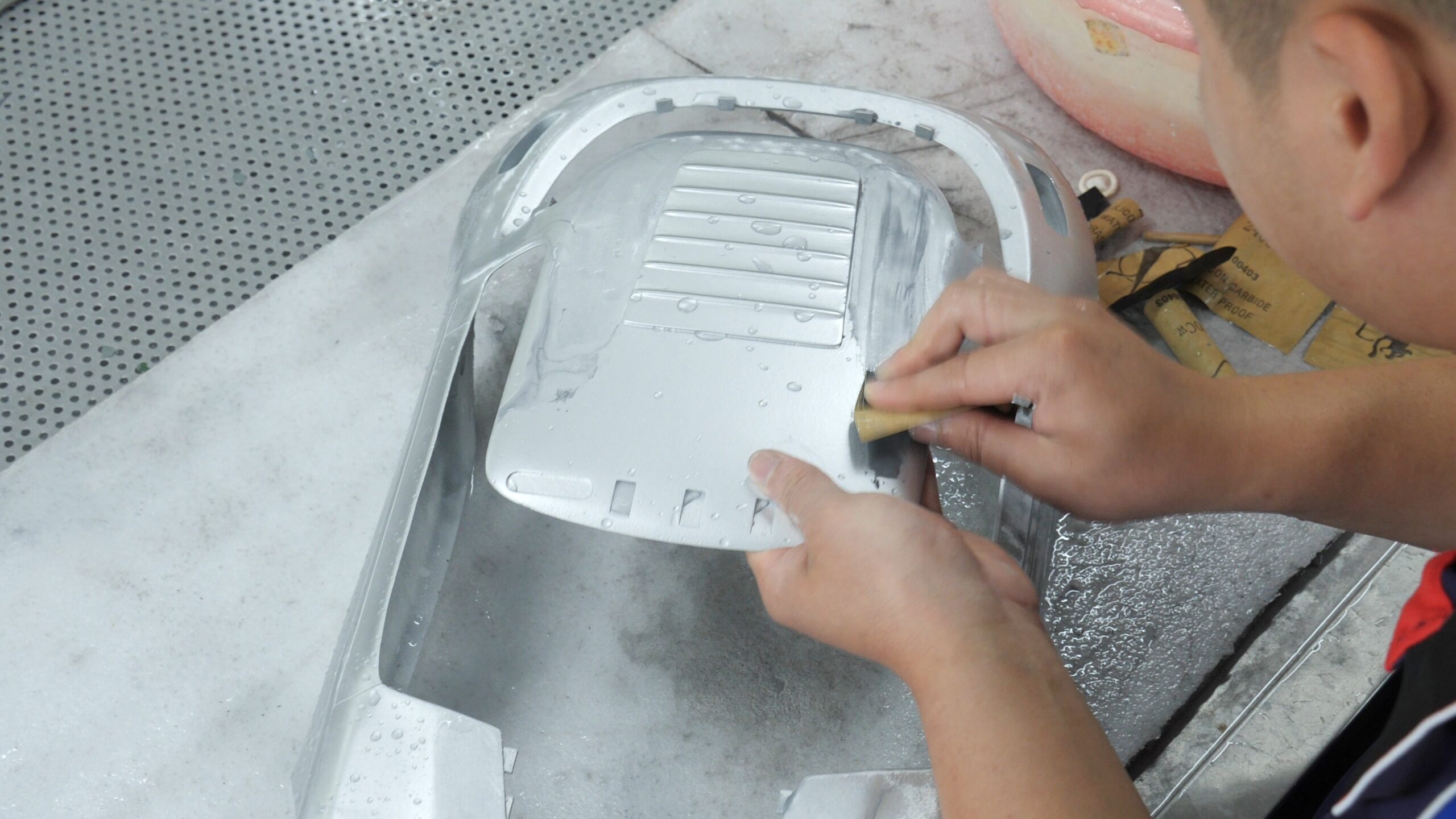
Sanding uses abrasive paper to remove burrs, machining marks, and bonding traces from the part surface. It improves flatness, reduces roughness, and creates a smooth, refined finish.
2. Sandblasting
Using compressed air, abrasives such as quartz sand, garnet, or steel grit are propelled onto the surface. This removes contaminants, increases roughness, improves fatigue resistance, and enhances paint or coating adhesion.
3. Polishing
On the basis of sanding, polishing uses flexible tools with abrasives to achieve a smooth or mirror-like surface. It does not improve dimensional accuracy but significantly enhances surface gloss. Transparent PMMA parts require extremely high polishing standards and are therefore much more expensive.
4. Painting (Spray Coating)
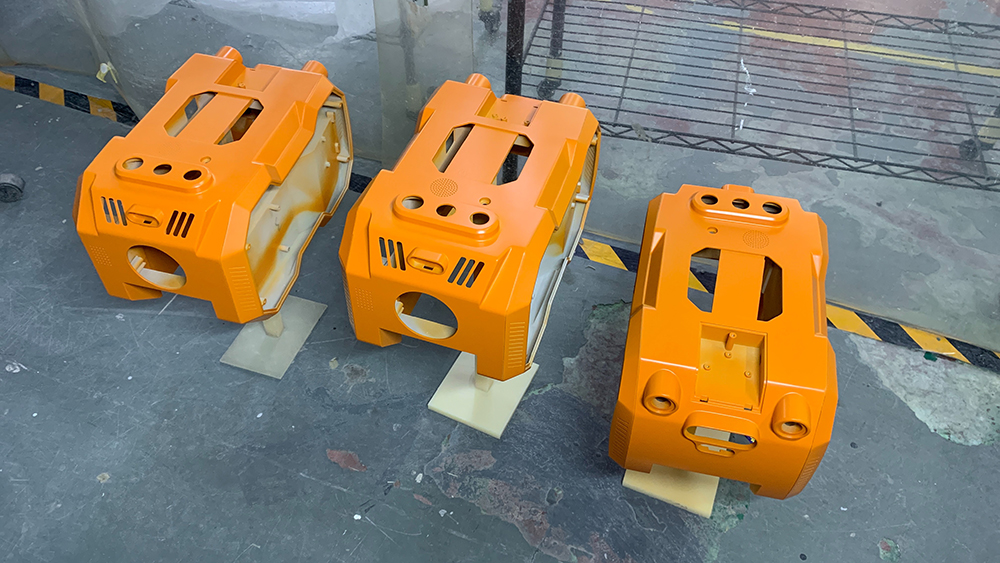
Spray painting is widely used to hide surface defects, achieve various colors, gloss levels, textures, and tactile effects, and improve surface hardness and scratch resistance. Effects include matte, semi-gloss, high-gloss, textures, leather finishes, brushed metal effects, and rubberized coatings.
5. Powder Coating (Electrostatic Spraying)
Powder coating uses electrostatic attraction to adhere powdered paint to the surface, followed by heating to melt and cure the coating. It offers excellent adhesion, high mechanical strength, corrosion resistance, and environmental friendliness. However, it produces a thicker coating with limited texture options.
6. UV Coating
UV coatings cure rapidly under ultraviolet light and provide high hardness, excellent wear and chemical resistance, and superior gloss. They require a dust-free environment and have limitations such as susceptibility to cracking, yellowing over time, and higher cost.
7. Printing
Screen printing transfers ink through open mesh areas to create raised patterns with strong adhesion and vivid colors.
Pad printing uses a silicone pad to transfer images onto curved or uneven surfaces.
8. Laser Engraving
Laser engraving removes surface coatings (such as paint layers) to reveal underlying colors and create precise patterns. It has limitations in depth, maximum engraving area, and difficulty with white or curved surfaces.
9. Plating
Electroplating deposits metal onto a surface through electrical current. It includes wet plating and vacuum plating. Wet plating provides strong adhesion but requires extremely fine surface preparation. Vacuum plating supports a wider range of colors but has weaker adhesion unless top-coated with PU or UV.

10. Oxidation (Anodizing)
Oxidation forms protective oxide films on metal surfaces.
-
Chemical oxidation produces thin, porous films with good dyeing ability.
-
Anodizing forms thicker, harder, more corrosion-resistant films and supports multiple colors.
Widely used on aluminum and aluminum alloys.
11. Passivation
Passivation creates a stable protective film that greatly reduces metal dissolution, improves corrosion resistance, and enhances coating adhesion.
12. Blackening (Bluing)
Blackening forms a black oxide layer to improve corrosion resistance and mechanical strength. It is commonly used for steel (not suitable for stainless steel).
13. Brushed Finish
Brushing uses abrasives to create linear textures on metal, offering a refined, non-mirror metallic appearance. It includes straight grain and cross grain patterns. Effect varies by craftsmanship, so a sample is typically required.
14. Phosphating
Phosphating creates an insoluble phosphate conversion coating (zinc, manganese, or iron phosphate) that improves corrosion resistance, electrical insulation, and paint adhesion. Widely used in the automotive industry before painting.