
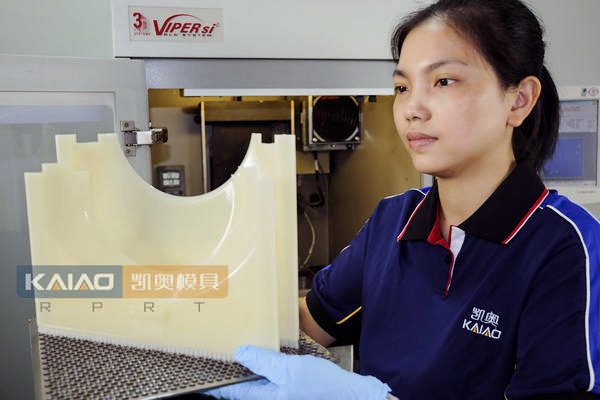
1. Laser Rapid Prototyping (RP)
Laser rapid prototyping (RP) refers to advanced manufacturing technologies that directly fabricate complex 3D objects from CAD models under computer control. RP is based on a “discrete + layered accumulation” principle: the model is sliced into layers, and material is added layer by layer to build the final part. All RP systems operate on this layer-by-layer forming concept.
RP excels in speed and its ability to produce complex geometries such as undercuts and hollow structures. However, because it forms parts through layered buildup, surfaces are generally rougher than CNC machining, and thin walls may not be printable. For example, very thin wall sections cannot be produced.
(1) SLA – Stereolithography
SLA is the earliest, most mature, and most widely used rapid prototyping technology. It uses a UV laser to selectively cure photosensitive resin.
During forming, a build platform is positioned just below the resin surface. A focused UV laser scans the layer outline, solidifying the resin to create a thin cross-section. The platform then lowers by one layer thickness, allowing fresh liquid resin to cover the cured layer. This process repeats until the entire part is built. The finished part is then removed, washed, and surface-finished.
SLA materials are limited to photosensitive resins, and wall thicknesses below 0.4 mm cannot be processed.
(2) SLS – Selective Laser Sintering
SLS uses a CO₂ laser to selectively sinter powder materials such as plastic, nylon, ceramic-binder blends, or metal-binder blends.
Before forming, the chamber is preheated and filled with nitrogen. A thin layer of powder is spread on the build platform. The laser selectively sinters the solid areas according to the sliced cross-section. After each layer, the platform drops by one layer thickness and a new powder layer is spread. Unsintered powder serves as support material and is removed after cooling.
SLS materials include wax, polycarbonate, nylon, glass-filled nylon, composite nylon, and some metals. Wall thickness below 0.5 mm cannot be manufactured.
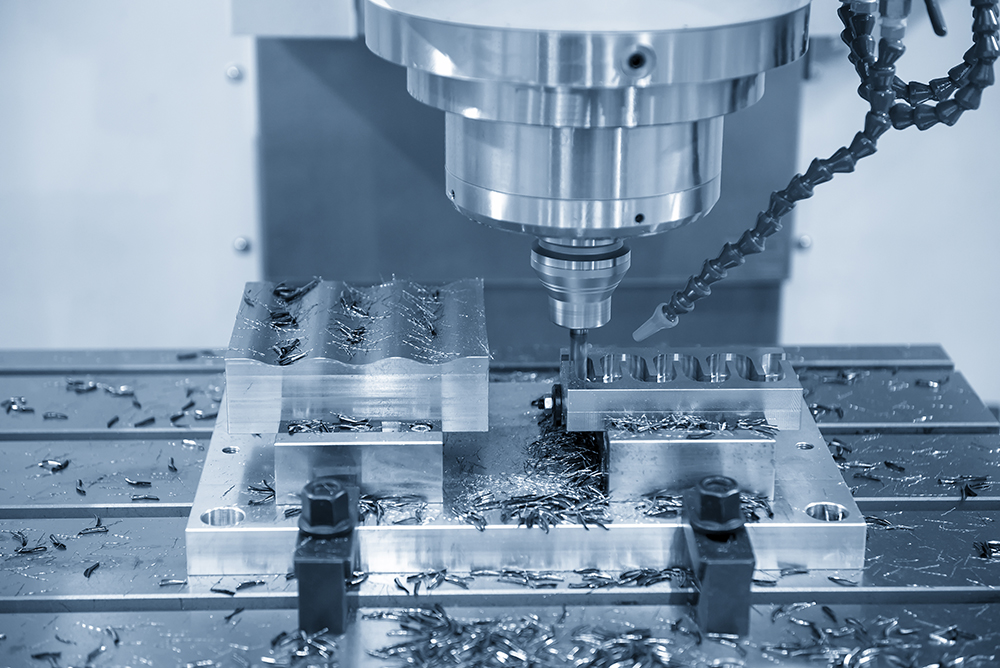
2. CNC Machining
CNC prototypes are produced using computer numerical control machining centers. CNC follows conventional cutting principles, but with computer-controlled automation that ensures high precision, high efficiency, and excellent repeatability.
CNC prototypes accurately reflect design details and offer high-quality surface finishes that closely resemble mass-produced parts—especially after painting, polishing, or silk-screening. The process involves complex toolpaths and detailed process planning, which is why CNC has become the mainstream method in prototype manufacturing.
Common CNC materials include ABS, PC, POM, PP, PMMA (acrylic), nylon (PA), glass-fiber reinforced nylon, bakelite, aluminum alloys, magnesium alloys, brass, stainless steel, iron, and others.

3. Vacuum Casting (Urethane Casting)
Vacuum casting—also known as silicone mold casting—requires a master model, which is used to create a silicone mold. Under vacuum, two-part polyurethane is degassed, mixed, preheated, and poured into the mold. The mold is then cured in a 60–80°C oven for 2–3 hours.
A silicone mold typically lasts for 10–20 copies. Due to silicone shrinkage (approximately 0.3%), the dimensional accuracy and appearance of later copies gradually decrease. Thin sections below 0.8 mm are difficult to cast and may deform significantly.
Vacuum casting is suitable for small-batch prototypes, complex structures, uniform wall thickness parts, and components requiring limited functional performance.
4. Low-Pressure Casting (RIM – Reaction Injection Molding)
Low-pressure casting, also known as Reaction Injection Molding (RIM), is a rapid manufacturing technology for producing low-volume molded parts. Two-component polyurethane materials are mixed and injected into a fast mold under ambient temperature and low pressure. Products are formed through chemical reactions including polymerization, crosslinking, and curing.
RIM offers advantages such as short production cycles, simple processing, high efficiency, and low cost. Shrinkage is approximately 0.5%, and mold life ranges from 200 to 1,000 shots, depending on mold material.
RIM is suitable for small-batch production, simple structural panels, large housings, thick-wall parts, and components with uneven wall thickness.