
In the product development and design verification stage, CNC prototyping plays a crucial role. The choice of material directly affects the prototype’s functionality, testing accuracy, and final decision-making. As a professional rapid manufacturing provider, Kaiao Precision has summarized the characteristics and applications of commonly used CNC materials to help you make more informed decisions.
I. Plastic Materials
1. ABS
Characteristics:
Well-balanced mechanical properties, including strength, toughness, and impact resistance. Easy to post-process, such as gluing, painting, and plating.
Applications:
General structural parts, consumer electronics housings, appliance enclosures, and functional or appearance verification models.
2. PC (Polycarbonate)
Characteristics:
High transparency, excellent impact resistance, and solid heat resistance (around 120°C).
Applications:
Transparent covers, lighting components, and parts requiring high toughness or temperature resistance.
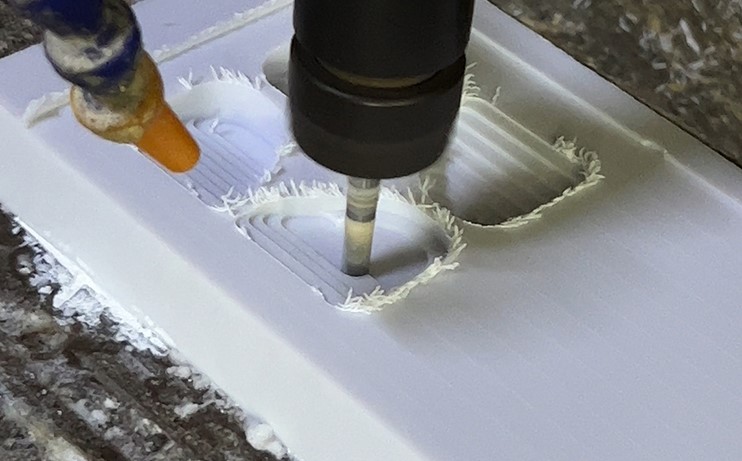
3. PMMA (Acrylic)
Characteristics:
Exceptional transparency and gloss, excellent weather resistance, easy to machine and polish.
Applications:
Optical lenses, display panels, transparent windows, and showcase models.
4. PA (Nylon)
Characteristics:
High mechanical strength, wear resistance, and chemical stability. Available with glass fiber reinforcement (PA + GF).
Applications:
Gears, bearings, durable structural parts, and components requiring high wear resistance.
5. POM (Acetal / Delrin)
Characteristics:
High rigidity, low friction, and excellent dimensional stability.
Applications:
Precision gears, sliding components, springs, and mechanical parts requiring high accuracy.
II. Metal Materials
1. Aluminum Alloys
Characteristics:
Lightweight, strong, thermally conductive, and suitable for various surface treatments such as anodizing and sandblasting.
Applications:
Aerospace components, automotive parts, robotic frames, heat sinks, and lightweight structural prototypes.
2. Stainless Steel
Characteristics:
High strength, hardness, corrosion resistance, and heat resistance.
Applications:
Medical devices, food-processing components, chemical equipment parts, and applications requiring durability.
3. Brass
Characteristics:
Excellent electrical and thermal conductivity, good wear resistance, easy machinability, and an attractive surface appearance.
Applications:
Hardware components, valves, conductive parts, decorative prototypes, and retro-style product models.
III. Key Factors When Selecting Materials
1. Functional Requirements
-
Strength and toughness: ABS, PC, PA, aluminum
-
High-temperature resistance: PC, PEEK, metal materials
-
Transparency: PMMA, PC

2. Post-processing Requirements
-
Painting and plating: Best with ABS
-
Anodizing: Suitable for aluminum, offering enhanced surface hardness and color options
3. Budget and Performance Balance
Plastic materials offer lower cost and high efficiency.
Metal materials provide better performance and closer resemblance to final production parts.
IV. Kaiao Precision’s Recommendation
At Kaiao, we not only offer a wide range of CNC materials but also provide professional consulting based on your product’s application, testing needs, and budget. Whether your goal is fast functional verification or high-performance prototype testing, we can assist you in selecting the most suitable material and machining process.
Feel free to reach out to the Kaiao technical team to bring your ideas closer to production reality.